
On reflection, it seems to me that the variability of the performance of the Ferrari cars in Hungary and previous races is essentially a matter of weather. In Hockenheim, the temperatures were unusually low and Ferrari complained that they could not get the tires up to a decent operating temperature. As temperatures increased over the Hungarian weekend, so did the pace of the Ferraris. The race was held in extremely hot conditions and suddenly Massa was the class of the field.
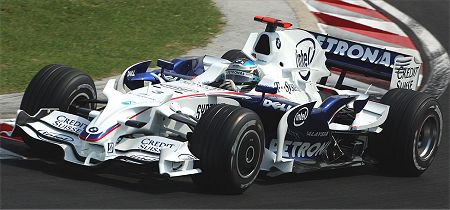
When it is remembered that McLaren are supposed to be very hard on their tires in warm conditions, it makes sense that they should thrive in the cool races and Ferrari fare better in the heat. And it is not just the Ferrari/McLaren duel that is affected - BMW too are beginning to suspect that the heat was the cause of their woeful performance at the Hungaroring.
"It must be about the tyres," added Theissen. "It (an oversteer problem) was both drivers, for the entire duration of the race, on both tyre compounds."
Even Bridgestone admit that they were caught out by the unseasonally low temperatures encountered in Hockenheim and probably should have brought softer tires. One wonders how they are going to select compounds for the new circuits on the calendar, Valencia and Singapore.
But the pattern is becoming fairly evident; tires are having an important influence on the races, with some teams happy when the weather is cool, others more cheerful when temperatures are high. This has made for an extremely close championship but I wonder whether it is healthy for tires to play so large a part. Surely the intention of having one tire manufacturer was to lessen the effect they have on relative performance of the teams?
We all know that the idea behind the insistence on there being two compounds available at each race and that teams use both was so that the focus (and therefore advertising coverage) remain on Bridgestone as supplier. But this has failed in practice - we talk of hards, mediums and softs and never mention Bridgestone.
If Bridgestone were to bring all four compounds to each race and then allow the teams to work out which is best for them in the race, would there not still be attention upon which team is using which tire? Limiting the tire company to two compounds that can then prove unsuitable for the conditions results in the tires having far too much influence on the races and has safety implications too.
Cost is cited as a reason for just two compounds being transported to each circuit but I cannot believe that it would be much more expensive to bring additional types. If safety is an issue, surely it has priority over the matter of costs anyway?
It seems to me that there are only two ways to go on this issue. Either we say a control tire is a control tire and Bridgestone must design one tire for all circumstances (apart from wets - they can continue as they are, of course), or we allow four compounds but let the teams choose which they prefer at each circuit. Taking the second option, tires will still be talked about and there might even be more interest in which tire each team is choosing. At the moment it is hardly an issue since almost all the teams adopt the same strategy; but if allowed to choose, it is fairly certain that Ferrari and Toyota would be going for softer tires than teams like McLaren and BMW.
Variety is the spice of both life and racing. We do not need the FIA interfering with things like tire choice in a vain quest to enliven the show - let the teams compete and there will be a show regardless.