
Over the last few years, every F1 season has been soured and disrupted by some sort of event. In 2005 we had the disastrous Indianapolis GP disputed by only six cars after the Michelin teams withdrew because of tire failures in practice. 2006 gave us the extremely dubious banning of mass dampers in mid-season, causing problems for Renault and enabling Ferrari to catch up; suspicions of the FIA attempting to keep the championship alive were inevitable.
And now we have the revelations issuing from the Stepneygate affair, apparent evidence of industrial espionage that makes the whole F1 business look very bad indeed. Is there something rotten at the core of F1 that gives rise to these constant scandals and disruptions? Or is it mere coincidence that so many incidents that make the sport look bad have happened so regularly?
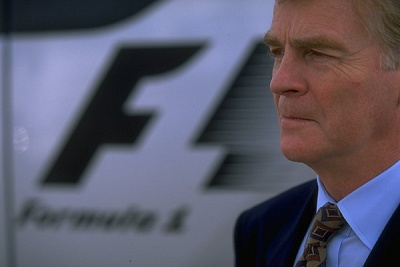
Max Mosley, president of the FIA
One has to say that a large part of the problem is the governing body; two of the events mentioned could have been dealt with in a way that would have prevented the sport from looking so foolish. At Indy, several compromise solutions were offered by Michelin and its teams but the intractability of the FIA and Ferrari prevented any of these from happening. The resultant fiasco was inevitable from that moment onwards.
Last year's ban on mass dampers was not only unfair in that it took place in the middle of the season, outlawing something that was known and accepted in the previous year, but also completely unnecessary. If the FIA were determined to ban the thing, there was no reason to insist upon it immediately, there being no safety or cheating issues involved; so fine an interpretation of technical nuances should wait until the end of the year before taking effect. The ultimate reason for the ban, maintaining that the dampers were "a movable aerodynamic device", was so far-fetched that it gave force to the argument of championship-fixing by the FIA.
And now we have the Stepney/Coughlan matter, with suspicion and speculation mounting as the saga unfolds from one incredible event to the next. This one, at least, cannot be laid at the door of the FIA.
Or can it? F1 is big business now, the stakes are high and winning costs multi-millions of dollars. This has been encouraged by the governing body, eager to see itself as a big player on the international stage. Hosting a GP costs unbelievable sums of money these days, thanks to the ever-increasing demands from Bernie Ecclestone for better and better facilities, and the teams are forced into extremely costly research in their efforts to design a winning car within the complex and restrictive rules devised by the FIA.
When so much money and prestige is involved, the temptation to win at all costs becomes huge, eclipsing all other considerations; it is in this sort of atmosphere that cheating suggests itself as a way to get or stay ahead.
The problem centers on that old bogey, filthy lucre. Since the aim of F1 is now to make more and greater profits, the rules and administration of those rules are increasingly influenced by monetary considerations only and the sport is forgotten. There is only one reason why we will in future have two races in small but rich states on the Persian Gulf, for instance, and that is money.
The FIA sets the culture and everyone involved in F1 has to adjust to survive in the resulting atmosphere. It becomes more important to Ferrari to win at Indy than for a proper race to take place; fair competition is forgotten in the need to provide the media with a spectacular show as payment for their investment.
Any governing body of a sport should not be subject to the need to make huge amounts of money. Yes, F1 should pay for itself and so money must always be a concern to some extent. But the prime job of the FIA is to provide a clear and simple set of rules for participation and an even-handed administration of those rules. Sometimes that might mean losing a chance for profit; but that should never influence decisions.
Just how you assemble a group of such honorable delegates who are dedicated to the good of the sport, I don't know. But I feel pretty sure that, as long as the FIA continues to see money as the primary aim and purpose of F1, these scandals and unseemly legal battles will happen with monotonous regularity.
And now we have the revelations issuing from the Stepneygate affair, apparent evidence of industrial espionage that makes the whole F1 business look very bad indeed. Is there something rotten at the core of F1 that gives rise to these constant scandals and disruptions? Or is it mere coincidence that so many incidents that make the sport look bad have happened so regularly?
Max Mosley, president of the FIA
One has to say that a large part of the problem is the governing body; two of the events mentioned could have been dealt with in a way that would have prevented the sport from looking so foolish. At Indy, several compromise solutions were offered by Michelin and its teams but the intractability of the FIA and Ferrari prevented any of these from happening. The resultant fiasco was inevitable from that moment onwards.
Last year's ban on mass dampers was not only unfair in that it took place in the middle of the season, outlawing something that was known and accepted in the previous year, but also completely unnecessary. If the FIA were determined to ban the thing, there was no reason to insist upon it immediately, there being no safety or cheating issues involved; so fine an interpretation of technical nuances should wait until the end of the year before taking effect. The ultimate reason for the ban, maintaining that the dampers were "a movable aerodynamic device", was so far-fetched that it gave force to the argument of championship-fixing by the FIA.
And now we have the Stepney/Coughlan matter, with suspicion and speculation mounting as the saga unfolds from one incredible event to the next. This one, at least, cannot be laid at the door of the FIA.
Or can it? F1 is big business now, the stakes are high and winning costs multi-millions of dollars. This has been encouraged by the governing body, eager to see itself as a big player on the international stage. Hosting a GP costs unbelievable sums of money these days, thanks to the ever-increasing demands from Bernie Ecclestone for better and better facilities, and the teams are forced into extremely costly research in their efforts to design a winning car within the complex and restrictive rules devised by the FIA.
When so much money and prestige is involved, the temptation to win at all costs becomes huge, eclipsing all other considerations; it is in this sort of atmosphere that cheating suggests itself as a way to get or stay ahead.
The problem centers on that old bogey, filthy lucre. Since the aim of F1 is now to make more and greater profits, the rules and administration of those rules are increasingly influenced by monetary considerations only and the sport is forgotten. There is only one reason why we will in future have two races in small but rich states on the Persian Gulf, for instance, and that is money.
The FIA sets the culture and everyone involved in F1 has to adjust to survive in the resulting atmosphere. It becomes more important to Ferrari to win at Indy than for a proper race to take place; fair competition is forgotten in the need to provide the media with a spectacular show as payment for their investment.
Any governing body of a sport should not be subject to the need to make huge amounts of money. Yes, F1 should pay for itself and so money must always be a concern to some extent. But the prime job of the FIA is to provide a clear and simple set of rules for participation and an even-handed administration of those rules. Sometimes that might mean losing a chance for profit; but that should never influence decisions.
Just how you assemble a group of such honorable delegates who are dedicated to the good of the sport, I don't know. But I feel pretty sure that, as long as the FIA continues to see money as the primary aim and purpose of F1, these scandals and unseemly legal battles will happen with monotonous regularity.