
Now that the season is over, the reviews of 2007 are beginning to roll out and, amongst them, are the inevitable driver assessments. Patrick has done a very good Top Ten over at Motorsport Ramblings, so good in fact that the only quibble I have is that, like everyone else, he under-rates Scott Speed.
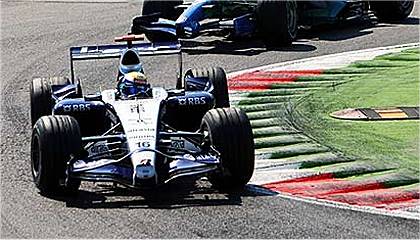
Nico Rosberg in the Williams FW29
Determined to be different, I have decided to rate the teams, rather than the drivers. And this is not about who built the best car or won the most races - we know that already; I base my assessment on how well each team has done with what it has. So, if saddled with a duff design, how did the team cope? If beset by unreliability, did they find and overcome the problem? If unable to pay for the big name drivers, did they manage to find an unexpected hotshoe amongst the pay drivers? These are the things that make a team and can ultimately bring success.
The fight was close at the top but, on balance, I have decided that the order should be:
1. Williams
Williams had a terrible year in 2006, never looking like contenders, underfunded and apparently an endangered species as the last true independent on the grid. Their recovery this year has been all the more remarkable as a result. Financially, they found more security in much better sponsorship and a supply of Toyota engines to replace their expensive Cosworths.
Driver selection was nothing if not sensible. Allowing the disgruntled Mark Webber to seek greener fields, they kept the promising rookie, Nico Rosberg, and teamed him with the reliable and much cheaper Alex Wurz. Although many criticized Alex's performances in qualifying, he delivered value for money in his ability to assist the engineers with development of the car. Rosberg was one of the revelations of the year, to the extent that we expected to see him at the sharp end of the grid after every qualifying session.
The car was a great improvement over last year's, although probably flattered by Rosberg's talent, and the team got on quietly with the job of developing it thoughout the year. In a year of fuss and palaver from every side, Williams as a team kept their heads down and limited their public utterances in Raikkonen-like fashion. They showed how a team should function, dealing with problems as they appeared instead of grumbling and making excuses. With the matter of customer cars now seemingly deferred for the moment, they have hope for the future, too.
So Williams get the top spot in my estimation, although only just ahead of my second choice.
2. BMW Sauber
The Germans have a reputation for efficiency and BMW epitomized this in their 2007 performance. Everything seemed to work well for them; early problems with the gearbox were soon sorted out and, almost from the first race, it became clear that they would be the third team after Ferrari and McLaren.
Their driver choice was sound and respectable: the experienced but still quick Nick Heidfeld alongside one of the bright hopes for the future, Robert Kubica. And Nick did more than was expected of him, staying ahead of his team mate in almost every race, unlike every other veteran teamed with a rookie. With the firm hand of Dr Theissen to prevent rivalry from getting out of hand, it was a pairing that allowed the F1.07 to show its quality.
And it was not a bad car at all - a logical development from the previous year's design, neat, compact and pretty in its conservative colors. It was generally reliable too, the only obvious failure unfortunately robbing Kubica of a possible win in China. So efficient were the team that it was a minor sensation when they managed to get something wrong. One gets the feeling that this team will only get better, continuing its considerable momentum until the championship is theirs.
3. Red Bull
Where are Ferrari and McLaren, I hear you cry. All in good time, I reply; we are looking at teams, not results, remember. And Red Bull deserve third spot for their good humor and perseverance with a car that proved difficult from the start. Yes, they suffered a mid-season bout of unreliability that scuppered their drivers' hopes of a decent showing; but they soldiered on, uncomplaining, until the problem was fixed.
All that hard work paid off in the end and David Coulhard joined Mark Webber in contesting the top ten places on the grid. Not bad, considering the car had been a major disappointment at the beginning of the year. Even the fact that Webber suffered probably more car failures than in any other year and yet has not stormed off in a huff argues for the good atmosphere within this team. They're a compact, efficient little group that can only get better with time.
4. Renault
Renault suffered more than most from the switch to Bridgestones this year yet they have kept working, somehow staying in touch with the top teams if never a real threat to their nemesis, BMW. Were it not for the ridiculous antics and pronouncements of Flavio Briatore, I would probably have placed them ahead of Red Bull. He is altogether too loud and makes a very good team with great understanding of good publicity look cheap.
Pat Symonds was the antidote to Flavio's excesses, of course, together with the uncomplaining, if uninspiring, work of Fisichella and the burgeoning promise of Kovalainen. The disappointing performance of the car creates doubts about Renault's chances next year, even if Alonso does drive for them, but the team itself is a model of perseverance in adversity. Don't write them off just yet.
5. McLaren
This should have been McLaren's year. Had it not been for a wayward designer and a disgruntled Ferrari employee, a driver pairing that proved explosive, and a series of tactical errors in the last few races, they would have walked it. A better example of shooting oneself in the foot is hard to imagine.
Yet it has to be admitted that, for most of the year, the team has held together under enormous pressure and it is understandable, at least, that they should fade at the end. And that is why I place them ahead of Ferrari.
6. Ferrari
Ferrari looked good, then poor, then good again, then poor, and finally good. At times they were unbeatable, at others in such chaos that it seemed the good old days of Italian drama had returned. Refueling errors, unbelievable tire choices, suspect reliability, all combined to spoil Ferrari's year and it was only thanks to the mistakes of others that they managed to grab the drivers championship at the end.
In fact, it was their driver choice that proved their saving grace. With Raikkonen demonstrating how to race rather than create controversy and Massa going quickly when at the front, they won their share of races.
But the invincibility of the Schumacher days has departed.
7. Spyker
Give them their due, they had problems galore throughout the season but rode them out and found a new sugar daddy at the end. It is easy to laugh at the tail enders but we need to take into account such things as funding as well as mere results. After all, the greatest team of the last few decades, Minardi, was also perpetually under-funded.
Unlike most people, I was unimpressed by Spyker leading a GP, since it was entirely due to a lucky tire choice, but put more store in Adrian Sutil's performances once the 'B'-spec car appeared. That was a clear leap forward that deserves more recognition of the team's efforts. Mike Gascoyne, their designer, is talking of midfield placings next year and, with their improved funding, it just might happen.
8. Super Aguri
Everyone's favorite team, it seems, SA amused us by beating their parent team, Honda, at most races this year. That was entirely due to Honda getting it hopelessly wrong, however, and SA's performances were variable at best. Both drivers shone at times and then threw it away at others. They occupy eighth spot merely because they were better than the three that follow.
9. Honda
Other teams had cars that turned out be dogs, as well as Honda. The difference was that the others found out what was wrong and fixed it; Honda were completely mystified by the car's failure to perform, didn't listen to what Barrichello was telling them until halfway through the season, and then still failed to make any great improvements. Their attack on the F1 employment market merely served to highlight their problems and they seemed in total disarray, apart from the stoic perseverance of their drivers.
Maybe next year, Jenson.
10. Toro Rosso
I had high hopes that STR would embarrass Red Bull this year but that was before I realized just how bad their man management is. With a car identical to RBR's, they were close on occasion while they stuck with Liuzzi and Speed but insisted on blaming the drivers for the car's faults. The fact that Speed's replacement, Vettel, managed to score a few points late in the season was thanks to a couple of wet races where the car shone and is no indicator that the team are over their fundamental problems. I see no reason why they will fare any better next year.
11. Toyota
Loads of money, two quick drivers, experience with Bridgestones, and no results worthy of the name. It's a terrible record and can only be explained by the company's inability to understand that the team must be allowed to get on with it unhampered by decisions from the board of directors. Let them study Renault to see how a car company goes F1 racing.
And that's it. Well, you didn't expect me to go along wih conventional wisdom, did you?
Nico Rosberg in the Williams FW29
Determined to be different, I have decided to rate the teams, rather than the drivers. And this is not about who built the best car or won the most races - we know that already; I base my assessment on how well each team has done with what it has. So, if saddled with a duff design, how did the team cope? If beset by unreliability, did they find and overcome the problem? If unable to pay for the big name drivers, did they manage to find an unexpected hotshoe amongst the pay drivers? These are the things that make a team and can ultimately bring success.
The fight was close at the top but, on balance, I have decided that the order should be:
1. Williams
Williams had a terrible year in 2006, never looking like contenders, underfunded and apparently an endangered species as the last true independent on the grid. Their recovery this year has been all the more remarkable as a result. Financially, they found more security in much better sponsorship and a supply of Toyota engines to replace their expensive Cosworths.
Driver selection was nothing if not sensible. Allowing the disgruntled Mark Webber to seek greener fields, they kept the promising rookie, Nico Rosberg, and teamed him with the reliable and much cheaper Alex Wurz. Although many criticized Alex's performances in qualifying, he delivered value for money in his ability to assist the engineers with development of the car. Rosberg was one of the revelations of the year, to the extent that we expected to see him at the sharp end of the grid after every qualifying session.
The car was a great improvement over last year's, although probably flattered by Rosberg's talent, and the team got on quietly with the job of developing it thoughout the year. In a year of fuss and palaver from every side, Williams as a team kept their heads down and limited their public utterances in Raikkonen-like fashion. They showed how a team should function, dealing with problems as they appeared instead of grumbling and making excuses. With the matter of customer cars now seemingly deferred for the moment, they have hope for the future, too.
So Williams get the top spot in my estimation, although only just ahead of my second choice.
2. BMW Sauber
The Germans have a reputation for efficiency and BMW epitomized this in their 2007 performance. Everything seemed to work well for them; early problems with the gearbox were soon sorted out and, almost from the first race, it became clear that they would be the third team after Ferrari and McLaren.
Their driver choice was sound and respectable: the experienced but still quick Nick Heidfeld alongside one of the bright hopes for the future, Robert Kubica. And Nick did more than was expected of him, staying ahead of his team mate in almost every race, unlike every other veteran teamed with a rookie. With the firm hand of Dr Theissen to prevent rivalry from getting out of hand, it was a pairing that allowed the F1.07 to show its quality.
And it was not a bad car at all - a logical development from the previous year's design, neat, compact and pretty in its conservative colors. It was generally reliable too, the only obvious failure unfortunately robbing Kubica of a possible win in China. So efficient were the team that it was a minor sensation when they managed to get something wrong. One gets the feeling that this team will only get better, continuing its considerable momentum until the championship is theirs.
3. Red Bull
Where are Ferrari and McLaren, I hear you cry. All in good time, I reply; we are looking at teams, not results, remember. And Red Bull deserve third spot for their good humor and perseverance with a car that proved difficult from the start. Yes, they suffered a mid-season bout of unreliability that scuppered their drivers' hopes of a decent showing; but they soldiered on, uncomplaining, until the problem was fixed.
All that hard work paid off in the end and David Coulhard joined Mark Webber in contesting the top ten places on the grid. Not bad, considering the car had been a major disappointment at the beginning of the year. Even the fact that Webber suffered probably more car failures than in any other year and yet has not stormed off in a huff argues for the good atmosphere within this team. They're a compact, efficient little group that can only get better with time.
4. Renault
Renault suffered more than most from the switch to Bridgestones this year yet they have kept working, somehow staying in touch with the top teams if never a real threat to their nemesis, BMW. Were it not for the ridiculous antics and pronouncements of Flavio Briatore, I would probably have placed them ahead of Red Bull. He is altogether too loud and makes a very good team with great understanding of good publicity look cheap.
Pat Symonds was the antidote to Flavio's excesses, of course, together with the uncomplaining, if uninspiring, work of Fisichella and the burgeoning promise of Kovalainen. The disappointing performance of the car creates doubts about Renault's chances next year, even if Alonso does drive for them, but the team itself is a model of perseverance in adversity. Don't write them off just yet.
5. McLaren
This should have been McLaren's year. Had it not been for a wayward designer and a disgruntled Ferrari employee, a driver pairing that proved explosive, and a series of tactical errors in the last few races, they would have walked it. A better example of shooting oneself in the foot is hard to imagine.
Yet it has to be admitted that, for most of the year, the team has held together under enormous pressure and it is understandable, at least, that they should fade at the end. And that is why I place them ahead of Ferrari.
6. Ferrari
Ferrari looked good, then poor, then good again, then poor, and finally good. At times they were unbeatable, at others in such chaos that it seemed the good old days of Italian drama had returned. Refueling errors, unbelievable tire choices, suspect reliability, all combined to spoil Ferrari's year and it was only thanks to the mistakes of others that they managed to grab the drivers championship at the end.
In fact, it was their driver choice that proved their saving grace. With Raikkonen demonstrating how to race rather than create controversy and Massa going quickly when at the front, they won their share of races.
But the invincibility of the Schumacher days has departed.
7. Spyker
Give them their due, they had problems galore throughout the season but rode them out and found a new sugar daddy at the end. It is easy to laugh at the tail enders but we need to take into account such things as funding as well as mere results. After all, the greatest team of the last few decades, Minardi, was also perpetually under-funded.
Unlike most people, I was unimpressed by Spyker leading a GP, since it was entirely due to a lucky tire choice, but put more store in Adrian Sutil's performances once the 'B'-spec car appeared. That was a clear leap forward that deserves more recognition of the team's efforts. Mike Gascoyne, their designer, is talking of midfield placings next year and, with their improved funding, it just might happen.
8. Super Aguri
Everyone's favorite team, it seems, SA amused us by beating their parent team, Honda, at most races this year. That was entirely due to Honda getting it hopelessly wrong, however, and SA's performances were variable at best. Both drivers shone at times and then threw it away at others. They occupy eighth spot merely because they were better than the three that follow.
9. Honda
Other teams had cars that turned out be dogs, as well as Honda. The difference was that the others found out what was wrong and fixed it; Honda were completely mystified by the car's failure to perform, didn't listen to what Barrichello was telling them until halfway through the season, and then still failed to make any great improvements. Their attack on the F1 employment market merely served to highlight their problems and they seemed in total disarray, apart from the stoic perseverance of their drivers.
Maybe next year, Jenson.
10. Toro Rosso
I had high hopes that STR would embarrass Red Bull this year but that was before I realized just how bad their man management is. With a car identical to RBR's, they were close on occasion while they stuck with Liuzzi and Speed but insisted on blaming the drivers for the car's faults. The fact that Speed's replacement, Vettel, managed to score a few points late in the season was thanks to a couple of wet races where the car shone and is no indicator that the team are over their fundamental problems. I see no reason why they will fare any better next year.
11. Toyota
Loads of money, two quick drivers, experience with Bridgestones, and no results worthy of the name. It's a terrible record and can only be explained by the company's inability to understand that the team must be allowed to get on with it unhampered by decisions from the board of directors. Let them study Renault to see how a car company goes F1 racing.
And that's it. Well, you didn't expect me to go along wih conventional wisdom, did you?