
The FIA has published the regulations for 2010 and there are some unexpected aspects included, as well as many that have been predicted for some time. Pitpass has a brief summary of the main changes and a few surviving points that were supposed to disappear. Perhaps the most surprising survivor is KERS, given that all the teams had agreed to ditch it for next year.
Keith Collantine is pleased that KERS remains but this is one of those occasions when I must disagree. KERS seems an unnecessary and expensive blind alley to me, inappropriate in motor sport and bound to be thrown away once F1 adopts alternative fuels (as must happen sooner or later). Once all teams have usable systems, it becomes irrelevant anyway, the sport reduced to a contest of who can use his "go faster" button to greatest effect.
Inexplicable, too, is the FIA's decision not to outlaw tire warmers. Here again the teams reached agreement that they are an unnecessary expense and yet the governing body ignores their recommendation in the midst of budget restriction. I can only assume that pressure from Bridgestone, unwilling to produce new tire compounds for an era without tire warmers, proved the deciding factor. One has to wonder what leverage the Japanese tire company has over the FIA when repeatedly Bridgestone's every wish is catered for.
I can join in with Keith's elation over the end of refueling, however. At last we are going to have races decided on the track, rather than by the strategists in the pit lane. While the subtle thinking of such team leaders as Ross Brawn has to be admired, the return of pure racing more than compensates.
The lack of race refueling also means the end of the silly race fuel qualifying in Q3 and we will be treated to the sight of the best drivers in the best cars giving their all on near-empty tanks again. Anyone who remembers Ayrton Senna's magical qualifying laps will know how much this has been missed.
The increase in minimum weight limit may have been introduced to give the designers more leeway in fitting their KERS systems, but this will be swallowed up by the larger fuel tanks needed to go a race distance. So we will have heavier cars and that means the tires will have to be more durable, whatever Bridgestone thinks. Just as in the past, the driver's treatment of his tires will become important again and we could see races won or lost according to how much rubber remains on the car in the closing laps.
And that is what we should remember: there will still be pit stops for tires and there remains some room for strategy therefore. Those drivers who are able to manage their tires best are going to come to the fore and their value increase accordingly.
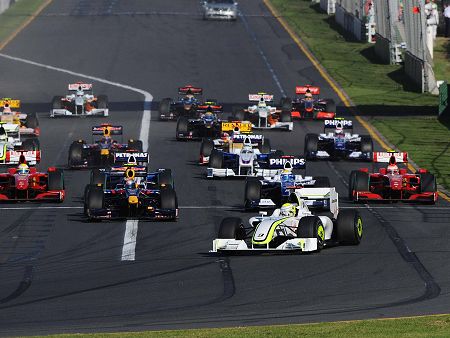
More restrictions on the use of wind tunnels and still no in-season testing leave the teams in pretty much the same position they are in now - having to rely heavily on simulations to evaluate potential improvements to the cars. To some extent at least, this retains the wild card factor that produced the success of the Brawn and Red Bull cars this season and that is good news as far as I am concerned. The dominance of two or three teams for long periods is counter productive to the spectator appeal of F1 and anything that introduces more uncertainty in predicting the outcome of future races is welcome.
Otherwise, there is little to wonder at in the new rules. The FIA have managed their usual trick of producing both good and bad in one document but there are signs of hope for the sport even so. As I have said many times before, simplification in the rules is what has been needed, not ever-increasing complexity, and these regulations show a definite trend towards the more straightforward rules of yesteryear. Long may that trend continue.