
Formula One fans may have their favorites but they all hate to see any team disappear from the grid. The sport is about competition, after all, and, if the number of competitors drops, the races become that much less watchable. Honda may have become somewhat of a laughing stock over the last couple of seasons but we are still shocked and saddened by its sudden departure from the scene.
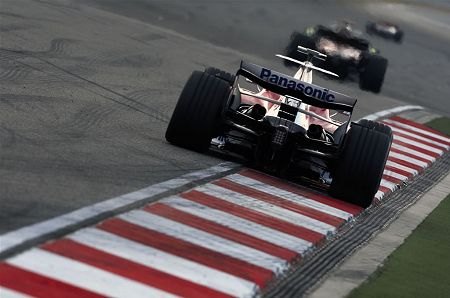
Are they leaving?
The hope has to be that a buyer will be found and the team can continue under another name. F1 teams are not corporate ventures, regardless of where the money comes from; they are associations of highly-skilled professionals of like mind and one aim - to win races. A sale becomes little more than a change of logo and color scheme when the team is so close-knit and interdependent. Minardi may have become Toro Rosso and Jordan been through several name changes to end up as Force India, but the personnel remain much as they were apart from a few new bosses.
In better times, Honda would be a bargain for any prospective buyer. It has excellent facilities and an experienced workforce that was expected to produce a more competitive car next year, now that Ross Brawn has had time to see what was going wrong and make the necessary changes. Honda are clearly treating the end of their involvement as an urgent matter and seem quite uninterested in what price the team might fetch. It is likely that it will be sold for considerably less than it is worth, therefore, and would be an ideal springboard for some company or enthusiastic magnate to break into the sport.
The problem is that it is not just a matter of purchase price; the running costs of F1 teams are high, too steep for many optimistic buyers in the past who have burned their fingers with a hasty entry into the sport. Funding from several sponsors is needed to help with running expenses and that is just what Honda do not have. And the economic slump that caused Honda's departure is the very factor that ensures that sponsorship is almost impossible to find at the moment. This will be the biggest obstacle to any sale of the team.
If no buyer is found, Honda will disband the team and the grid will be down to 18 cars in 2009. Some are saying that the FIA could ask certain teams to make up the numbers by entering a third car but why would they do this? Even supposing that third cars would be eligible for points (something that other teams would fight), the expense of running the extra car and driver comes at a time when all the teams are trying to lower costs, not increase them. I doubt that the FIA would find any takers.
There is no guarantee that other teams will not follow Honda's lead as well. Toyota is rumored to be considering withdrawal, now that their Japanese competitors have departed, and I have earlier made the case for the possible demise of STR before next season begins. Renault, too, are as unpredictable in their commitment to the sport as ever. If even one of these decides it is time to pack up, F1 is in serious trouble.
All this has given Max Mosely the chance to say he told us so, as he waves his agreement with Cosworth to build a standard engine and drivetrain. It is meaningless, of course, since no manufacturer is going to agree to use the engine and the idea just makes it more likely that they will leave the sport. That is the point at which we will all ask who made F1 so dependent on the manufacturers in the first place.
Now that FOTA are echoing Mosley's call for drastic cuts in expenditure in the sport, it is as well to remember that it was the entry of so many manufacturer teams that forced costs up to their present levels. Since they have the money, they will spend it in their efforts to win, at the same time making it impossible for smaller teams to compete. We are now seeing the outcome of this accelerated pace of development within a set of regulations so restrictive that any gains in performance are tiny in comparison to the effort and money spent on them. Costs reach a point where no one can afford to pay and then things start to fall apart.
Bernie Ecclestone says that F1 will survive and, for once, I agree with him. The entry list for the coming season may be a bit shorter than expected, but the races will take place and, in the meantime, the teams will be finding ways to keep going on much less cash than they enjoyed before.
It is the market place that will sort things out for the sport, not Mosley's depressing ideas, however. The standard engine is not due to be on offer until 2010 and, by that time, F1 will have found a way through the crisis and have adjusted its spending according to what is available. There has always been a vast difference between the amounts spent by the various teams; the difference will be that everyone will be spending much less than they were before.
We should still hope that a buyer be found for the Honda team. Apart from anything else, I was looking forward to seeing how much of a difference Ross Brawn would make to the performance of the car next year. It would be a great pity if all the team's preparations for the 2009 season were to go to waste.