
I have deliberately said little about Mosley's proposed standard F1 engine since he first introduced the idea in mid-September 2008. It was immediately obvious that it was not something that the manufacturer teams would accept and there was a strong likelihood that Max was using it as a bargaining counter.
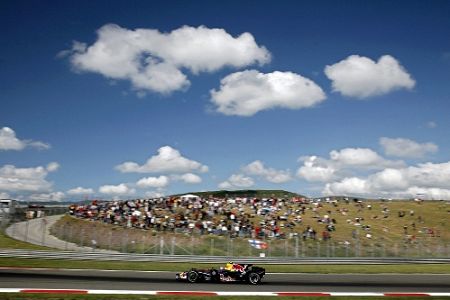
Clouds over Formula One
When representatives of FOTA, the teams' alliance, and the FIA met on October 28 and agreed on a number of cost-cutting measures, it seemed that the standard engine had gone away, having served its purpose. Certainly, the teams seemed to think so, judging by their optimistic statements after the meeting.
Then, on October 29, hardly a day later, the FIA repeated its insistence on the standard engine, confirming that they remained open to tenders for the contract to design and build such an anathema to F1. The manufacturers were quick to react, both Toyota and Ferrari declaring that they would leave the sport if standard engines were introduced. BMW and Mercedes are also reported to be strongly against the idea, understandably, since it attacks the main reason for their presence in F1.
Now the FIA has responded with a statement that is typical of their high-handed methods and apparent desire to force through their own ideas against all reason. Their point is that the teams must choose from three options, only one of which is the standard engine, the others being an engine from a single supplier (which amounts to the same thing) or the supply of customer power units to independent teams for less than 5 million Euros per season.
It is one sentence buried within the statement that really gives one pause for thought, however: "It is now for the manufacturers to agree one of the three FIA options or themselves produce concrete proposals to reduce costs to a sustainable level." My immediate reaction is that I thought the meeting in Geneva had done exactly that and the teams appeared to be under the same impression - hence the immediate and angry threats to withdraw from Toyota and Ferrari after the FIA re-introduced the standard engine.
It looks very much as if the FIA think they have found a magic wand that they can wave again and again to force the teams to endless streams of cost-cutting measures. It is clear now that, whatever agreement with the FIA may be reached, Mosley will just wave the wand to extract even more concessions.
It is well known that the threat of outrageous rule changes is a favorite ploy of Max's when seeking to get agreement to the measures he really wants taken. This has worked repeatedly in the past, mainly because the teams have not been unified in their response to him. But there is unity this time and I suspect that the FIA are inducing a crisis in the sport that will result either in the mass departure of the manufacturer teams from F1 or the complete re-organization of the governing body.
Obviously, Max wants the manufacturers to agree to supply engines and drive trains to the independent teams for less than 5 million euros per year. That is the one vaguely sane proposal in the options available but it is still not something the manufacturers will like. Effectively, they are being forced to contribute financially to their competitors, since the design and development of engines costs a good deal more than the target figure. So the manufacturers are being asked to make up the difference between reality and Mosley's dream of a cheap F1, whilst giving up a major aspect of their marketing strategy in competing in the first place.
The prime argument of the independent teams against customer teams being allowed was that such teams would have the benefit of advanced research and development without having to pay for it as all the other teams do. Under Mosley's proposal and ironically enough, the independents suddenly stand to gain from the availability of cheaper engines while the manufacturers continue to foot the bill. One can see how Max intends to divide FOTA by introducing conflicting interests into the equation.
I cannot see the manufacturers putting up with such a system. Their budgets are already threatened by the credit squeeze on the parent companies and it would make no sense for them to add to their commitments in the way proposed by the FIA. No doubt they will continue to negotiate in the hope of securing a more equitable solution but, considering how resistant to reason Mosley is, there remains a strong possibility that he will throw everything away in a fit of pique and impose the standard engine anyway.
Whoever is chosen to represent FOTA in future meetings with the governing body should be aware that it may not matter what is decided. As the FIA has demonstrated, they are quite prepared to agree to some things and then wave the wand to extract even more. That is no way to do business and gives the lie to all the FIA's talk of consultation with the teams to decide the future of F1. When the man you are negotiating with can take everything you offer and then act as if you had given nothing, it seems that he is intent only on his own agenda and you are merely there for show.
It is not how an international sport should be governed. The manufacturers have shown that they can achieve a unity of voice in spite of their differences; any governing body worth its salt should be able to work in concert with that, rather than to persist in Mosley's bully boy tactics. For the good of the sport and everyone concerned, Max must go, even if it takes a revolution to get rid of him.