
Well, after all that, McLaren has been handed a suspended three-race ban in the World Motor Sport Council hearing today. Effectively, this amounts to accepting that the team has been punished enough; all McLaren has to do now is be good for a year.
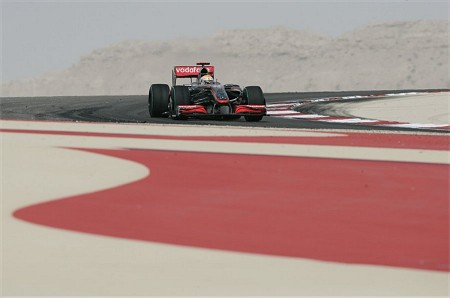
McLaren in the desert
Cynics might think that would not be particularly easy, given the FIA's apparent eagerness to catch out McLaren at every opportunity, but the departure of Ron Dennis, coupled with Whitmarsh's abject apology, has almost certainly altered the political atmosphere for the foreseeable future. Martin Whitmarsh has already spoken of his team having a new and better relationship with the FIA and the leniency of the WMSC decision is the first evidence of this.
We might think that this ushers in a new era of sensible and fair government by the FIA but that would be to ignore the tension between the ruling body and the teams' organization, FOTA. Although much is made of the two organizations working together to decide the future of F1, the reality is that the FIA sees FOTA as competition and regularly attacks the teams' unity. Even as we celebrate the decision on the lie-gate affair, the WMSC meets again to push through the contentious budget cap without waiting for FOTA's suggestions.
It is this overbearing attitude of the FIA's that causes much of the legal and political arguments that dog F1 and bring the sport into more disrepute than McLaren could ever manage. Achieving consensus on changes to be made might take a little longer than the dictatorial impositions preferred by the FIA, but the sport would be a happier place for it.
As I have pointed out before, it is not the budget cap itself that the teams object to; it is the arbitrary and extreme figure of $30 million set by Max Mosley that FOTA sees as unreasonable. There is no way that the larger teams, reputed to have spent up to $300 million per year in the past, can be expected to reduce their operation to work with just 10% of their previous expenditure.
Some would expect that the manufacturer teams could take the option of unlimited expenditure with restrictions in technical areas such as engines, movable wings and floors, but this is an unviable alternative. The Williams FW31 demonstrates that smaller teams are quite capable of competing with the big boys within the same technical regulations and on budgets well below those of the manufacturers'. Given the advantage of technical freedom in areas where the big teams are handicapped, the minnows could make the giants look very silly indeed.
So, if a budget cap option is imposed, the manufacturer teams would have to take it or leave the sport. With the cap set at $30 million, they would have to choose the second option - surely a situation that no one wants. And this is easily avoidable, if only the FIA would sit down with FOTA to hammer out a reasonable compromise on the amount of the cap.
Perhaps common sense will prevail in the end and a workable figure for the budget cap be agreed upon. That would have to be high enough for the manufacturers to remain viable but low enough not to deter those teams currently considering entering F1. Judging by the figures bandied about in discussions on the matter, such a compromise would be possible and could include the option of reducing the cap further in future years.
If that does happen, you can bet that all the teams, even the big spenders of yesteryear, will go for the budget option. As the double diffuser has so neatly demonstrated, technical freedom beats bags of money every time. And the goal of greatly reduced expenditure in F1 would have been attained (ignoring the problems of policing the cap).
Surely so great a prize should be sufficient to persuade the FIA to be more inclusive in its rule-making process? Yet it may not be so. The FIA has a long tradition of high-handed decisions, established in the days when the teams were divided against each other and they may see no reason to change. The WMSC will probably set a silly cap at their meeting today and it will take a summer of confrontation for the teams to have it altered to a more reasonable amount. That is how Mosley works these days.
Who was it who said, "Why can't we all just get along?"