
Both McLaren and BMW are trying as hard as ever to solve their cars' problems during the three-week break, McLaren taking a more orderly approach to upgrades and BMW readying some major improvements. Whilst it is good to see both teams pressing on with development rather than giving up on the season, there does seem to be a note of desperation in their press releases. Any team that finds itself with a design problem goes from race to race hoping that, this time, their adjustments will do the trick but the lack of testing means that such tweaks are much more of a hit-and-miss affair this year.
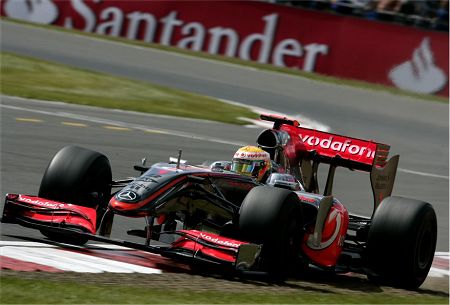
Lewis Hamilton in the difficult McLaren MP4-24
Considering the difficulty of developing a car with testing limited to a couple of hours in pre-race practices, I find it surprising that FOTA continues to back the policy of no testing sessions during the season. Although some teams, Red Bull and Brawn, for instance, have been lucky or astute enough to find all their improvements working, several others have struggled and I would have expected them to be calling for the re-introduction of test days therefore.
I can only assume that test sessions are so expensive as to be an obvious area in which to save money, although there may be an element of needing to justify the huge outlay on wind tunnels and computing power that some teams have invested in. What is becoming apparent is that such design aids have not been as trustworthy as expected. Those teams that have spent most on such technology, McLaren, BMW and Ferrari, have not been able to make it count in the race for development and the smaller outfits like Brawn and Red Bull seem to be able to maintain their lead without difficulty.
The difference may be in that the small teams are forced to rely on the ability of their designers and engineers and that this is a better strategy for a season without testing. It may be no coincidence that the two teams leading the pack this year are the same two with star designers, Adrian Newey and Ross Brawn; human experience and genius is still better than sheer computing power, it would seem.
If that is the case, the value of outstanding engineers is bound to increase. It would not be a surprise if both Newey and Brawn receive tempting offers to switch to big teams and there is bound to be an intensive search for previously ignored talent within design offices throughout the sport. This would be yet another effect of the new rules in returning us to the past, a time when designers made all the difference in a team's success or failure.
For many years, the drivers have been the pampered heroes of the sport, receiving most of the accolades and salaries beyond our imagination. This is changing now that budget restraint bites and the likelihood is that drivers will be paid a lot less in the future.
Instead, we may be entering an era when the designer is the star and his earning capacity accelerate in line with the excellence of the cars he produces. Which would only be a fair reflection of the importance of the car in F1 today; as Alonso has demonstrated so effectively over this season and the last, there is only so much a driver can do to compensate for the deficiencies of the car he drives. A designer, however, can be the difference between winning and being an also-ran.
And so the eternal struggle between design excellence and driving talent continues in F1. For many years the car has been the deciding factor in the sport and this looks to remain so, even if the current overtaking problem is solved. What may change is that the drivers no longer hope to drive for a specific team and instead will follow the designers in their quest for a car capable of winning races.
And poor Alonso, for so long rumored to be moving to Ferrari, may get his wish only to find that times have changed and he would be better off in a Force India or Toro Rosso. Don't laugh - it could happen!