
Bah, humbug. Sometimes I feel like the Scrooge of the F1 world, especially on those occasions when circumstances have prevented me from posting, as though I were too wrapped up in the festivities to break the seasonal hush. The truth is that I had a fairly normal Christmas (and I trust my readers had a merry one too - belated greetings and all that) and was betrayed by the complete lack of F1 news or controversies.
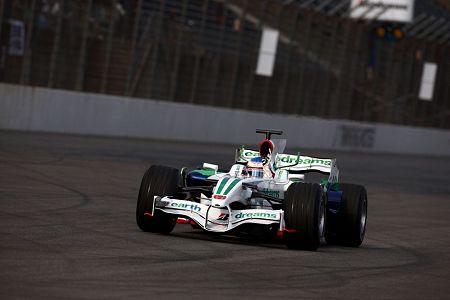
It has been as though the F1 world were in shock over the year just passed and the Honda withdrawal that ended it. Only the competing Santas, Dave Richards and Carlos Slim, have been worth a daily glance as they attempt to deliver a survival gift to Messrs. Fry and Brawn. "Oh save the team, Santa," we cry, "They have been good... Well, they have made up the numbers." But now Christmas has passed, Carlos denies he was ever interested and an ominous silence ensues from the Prodrive camp.
No seasonal cheer at Brackley, therefore, and we can only hope that the New Year brings better news for the team. But the episode does represent a change in the atmosphere of the sport. For the last two years we have watched as F1 has put on a show more spectacular, more outrageous and more ridiculous than ever before, with political machinations worthy of the Borgias, blatant manipulation of results by the puppet masters, the closest championship battles for years, new heroes to support and malign, old ones sniping from the sidelines and money thrown around as though it were going out of fashion.
And now it seems that money is indeed no longer trendy. The Honda bombshell has concentrated minds in ways they have not been for years and suddenly everything appears in a more realistic perspective. F1 is still a sport in spite of the concerted effort to turn it into a business and the world would hardly notice if it were to disappear overnight. If there have been huge profits and losses made over the last few years, it has been merely incidental to the main business of racing. The sport as a whole has tolerated the money and power brokers as long as the cars and drivers are allowed to race; now that their profits may take a hit, F1 continues and cares not.
This is what has been forgotten in the orgy of money-making that F1 was so briefly - that if something moves, guys will race and compete, whether it be lawn mowers, monster trucks or snow mobiles. F1 is merely the tip of the iceberg that is motor racing.
I am old enough to remember how amazed the world was that American colleges should have students who were there purely to play football. In fact, they were ahead of the game and had recognized sport as having the potential for entertainment and a business, therefore. If millions are being made through a business that appears to serve no useful purpose other than to entertain, it makes perfect sense that the players should receive training in the same way as the doctors, lawyers and accountants. The example of the film industry was there for all to see - the acting profession, once despised and treated as a refuge for vagabonds, had emerged as an arena for astronomical salaries as it became big business.
Although sport has followed the same route to making money, it is not, in essence, an entertainment in the same way as the film industry. "The show" may be cited as the reason for so many changes in F1 over the years but the driving force behind it remains competition between drivers and cars. Take away the television broadcast and the grandstands and there would still be those who raced purely for the joy of competition.
And that is what Honda has done for us: refocused our attention on the primary object of motor racing. In suggesting the possibility of the sport losing participants until it is no competition at all, Honda's sudden withdrawal makes us realize that the sport is not dependent on viewing figures and ever-increasing profits. F1 has always cut its cloth according to the resources available because those who race are driven to do so regardless of the circumstances. If it comes down to welding chassis together in backyard garages and stock block engines tweaked with pure human inventiveness, it can be done; it has happened before and can happen again. F1 was still F1 when the only spectators were a man and his dog.
Which all makes me surprisingly optimistic about the coming year and beyond. While all is gloom and doom on the economic front, it does us well to remember that F1 is a hardy beast and, in one form or another, it will survive and even prosper. Heck, even the greenies cannot get me down today - we'll race 'em with electric motors if we have to. But, be assured, we will race!