
Max Mosley has sent a letter to the F1 teams reiterating the cost-cutting measures agreed so far. The intent is to ensure there is no misunderstanding regarding the exact measures to be implemented in 2009 and 2010 but also to remind everyone that further economizing is necessary. As such, there is nothing new in the letter although it does provide a handy summary of the agreements so far.
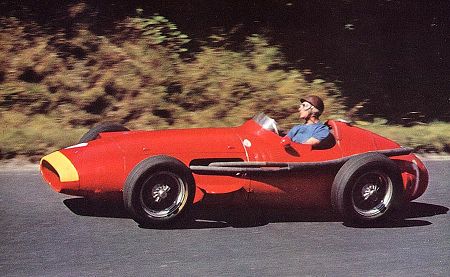
When drivers drove - Juan Manuel Fangio in a Maserati 250F
This comes just as FOTA members sit down for a meeting to discuss what other cost cuts could be made. There is more to it than that, however, as "it is believed...that high on the agenda for the meeting is Mosley’s proposal to investigate the possible future use of further moveable aerodynamic devices, in addition to the adjustable front wing that is allowed in 2009." Pardon me for saying so but this idea illustrates very effectively the contradictory and muddled thinking of the FIA President.
The FIA is pursuing several aims at once with all the new regulations being promulgated, one being to cut costs so that the sport remains affordable, another being to make races more exciting by increasing the amount of overtaking. Neither are bad intentions in themselves but they must work against each other to some extent when they require drastic changes to the cars. And movable aerodynamic devices are a case in point - they must inevitably involve the teams in more costly research and development.
It seems to me that the way to cut costs and reduce aerodynamic influence on overtaking at the same time is to take things off the cars, rather than insist they have new stuff added. This is true of KERS and it is true of movable wings; it would be much simpler and cheaper just to outlaw such additional development. We already have a regulation banning movable aerodynamic devices (and for good reason) - now it seems they are viewed as the magic wand that will solve F1's perennial overtaking problem.
It is so unnecessary. The reason why the cars cannot follow each other closely enough to allow for overtaking is the development of sophisticated aerodynamic downforce systems which do not function well in disrupted air. Surely the way to solve this is to get rid of the systems, rather than invent new complications intended to lessen their effect? If the aim is also to save money, it makes much more sense to me that unhelpful components be thrown away. How much was expended on removing all the winglets, lumps and bumps from the bodywork for 2009, for instance? Far less than would have been needed to hone the silly things even further, I suspect.
Consider, too, how all this added complication affects the driver. He already has more complexity stuffed into the steering wheel than he needs to be able to drive the car; now he will be expected to operate the movable wing as well as everything else. That might be a fine test for a world jugglers championship but it has nothing to do with driving skill. This insane compulsion to add more and more controls to the driver has to stop and now is an excellent opportunity to take a few away from him.
We may admire the F1 driver's ability to cope with so many inputs and adjustments required during a single lap but we are not actually applauding driving skill in that case - we are really in awe of multitasking ability (as an aside, this does increase the chances of female F1 drivers becoming a reality - they are better at multitasking than the male, after all. But is that our sole aim in the whole thing?). The concentration on giving the driver control over so many aspects of a car's behavior detracts from the actual business of driving and leaves him in the position of button-pusher while the car does everything else.
Years ago there was only one input required by a driver and it was called "the seat of the pants". That is where the difference lay between the good driver and the great - effectively, the masters had more sensitive and intelligent backsides than the others. With a finely attuned bum, the great driver could know exactly what his car was doing and what adjustments to the wheel, brakes and accelerator were needed. That is what we need to be getting back to if we are genuinely interested in having a driving contest.
So simplification is the answer, as always. Simplify the cars and we get back to the real business at hand: competition between drivers to establish who is the best. The engineers will have their say too but will have to do so without the benefit of all the aerodynamic add-ons and the wind tunnel tests. I have complete confidence that they will always out-think the regulators, no matter what the rules.
There is no chance whatsoever that the FOTA meeting will reach the same conclusions as mine, of course. The F1 world is not yet ready to chuck out its darlings of the last fifty years, the front and rear wings. That day may come but, in the meantime, I can hope at least that they will do the sensible thing and tell Max that they want nothing to do with movable aerodynamic devices and the cost of their development. Let us take the easy way out for once.