
I was going to write today about the little war of words between the FIA and Martin Brundle but GrandPrix dot com has written such a good post on it that I have very little to add. Let me just point out that the FIA's response to Martin's article dealing with the threat of being sued is the most mealy-mouthed statement I have read in a long time. Consider this, the FIA's main point:
"It is regrettable that instead of applauding the achievements of motor sport's international champions, who were recognised this weekend in a Gala prize giving ceremony in Monaco, Martin Brundle chose to continue his campaign against motor sport's governing body."
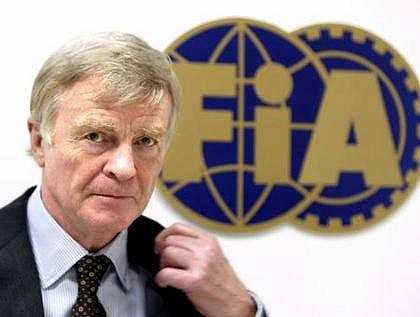
This amounts to whining. The FIA is saying that Martin ignored their fancy prize giving ceremony, preferring to answer the serious charge of libel that the FIA has raised against him. It does not seem to have occurred to them that they are only confirming one of Martin's points by this pathetic squeal of indignation - that the FIA will brook no criticism and expects to be fawned upon by all and sundry. If it were not so sad, it would be laughable.
Also in the news is the fact that Alonso has signed with Renault for 2008, now that their case has been so conveniently dealt with by the WMSC. No surprises there but a strange silence over the fate of Heikki Kovalainen, whose seat has been taken by Nelsinho Piquet. Presumably Ron Dennis will have to step in to save the Finn from the Flav's sudden transformation from benevolent uncle to opportunist extraordinaire.
All this has been swept away by a post in Keith Collantine's F1 Fanatic blog, however. Entitled Mosley on McLaren, F1 engines, customer chassis and more, the article picks out salient points from an interview with Max Mosley. This appeared in a new publication entitled The Paddock and was conducted prior to the Renault hearing, but it contains some fascinating snippets, far too much fodder to answer in a comment. Hence this post.
We start with what is either a lie or a reflection of how devious Max can be:
At that stage I’d already been told that some emails existed, by Bernie [Ecclestone]. Actually, he’d been shown a Blackberry, but at the time I thought he’d been shown the actual emails… Bernie just said: "I’ve seen these emails, they’re all in Spanish, but I’m told they’re very compromising."
Max is saying that he knew about the emails before Ron advised him of their existence. That is different from what he said at the time and so he is lying now or lied then. But never mind that - let us consider how Max reacted when Ron told him of Alonso's threat; he agreed with Ron that there were probably no emails and Alonso was just trying to apply pressure to get what he wanted. If what Max is now saying is true, that amounted to deception and lying, hardly the behavior we should expect of a president of the FIA.
We then move on to Max's assessment of the WMSC McLaren verdict:
Well, I thought then, and I still think, that from a legal point of view, we should have excluded everybody. I find it very difficult logically to justify excluding the team, and not the drivers. The reason the team was excluded is that the information had been used, and that gave them an advantage, and therefore the drivers also had an advantage. But the emotional view in the World Council, the hearts versus heads view, was that we had a wonderful championship here involving the two McLaren drivers, and we shouldn’t ruin it. As it turned out, they were absolutely right, because it was a wonderful end to the championship. And in the end, I think, arguably justice was done.
How many times have you been told that Max is a lawyer? Bearing that in mind, have you ever seen such a wonderful example of muddled thinking in your life? On the one hand Max still thinks that both team and drivers should have been excluded. But, on the other, it turns out that those who argued against him "were absolutely right" and "justice was done". Pardon me for saying it, Max, but you can't have it both ways.
There follows the most blatant admission that the verdict was the result of Max's opinion:
Asked directly whether McLaren were convicted without any hard evidence he responded:
This is true. For a lot of it, you had to draw the inference. For me, the key thing was the discussion between de la Rosa and Alonso about information from Stepney being tried in the simulator, and/or the wind tunnel, plus the information about the gas in the tyres and so on. We were given evidence to the effect that none of these things had been tried and that the decision not to try them had been taken by de la Rosa, without consulting any of the engineers. That wasn’t credible.
Wasn't credible? So, because Max thinks that it "wasn't credible", we are supposed to ignore the evidence that the information was not used and prefer the alternative based on no evidence at all. This guy is a lawyer? I am dumbfounded at such an open admission that McLaren were convicted without evidence, especially as Renault were let off scot free when there was evidence aplenty.
Moving on to the engine regulations, it becomes clear that F1 is now just a test bed for the manufacturers. We are told that the small turbocharged engines previously proposed would be too slow and quiet to be regarded as racing engines (which only goes to show that Max understands nothing about how engineers can extract phenomenal amounts of power out of the weirdest machines) and that such engines would not make "a significant contribution to road engine or environmental technology."
But hold on, I thought that was the very idea behind such engines - that they would use bio-fuels and be environment-friendly. That was what Max told us at the time, anyway. Now suddenly they are irrelevant and the gasoline-burning lumps already in use are much better. I'm sorry, but that makes no sense at all.
As for Max's dislike of the engineers beginning to investigate the possibilities inherent in any proposed engine rule changes before they are instituted, they would be fools not to. That's what racing is all about and the reason we expect rule changes to be announced ahead of time - to give competitors time to prepare. In 1961 the sudden change to 1.5 liter engines caught the British engine suppliers by surprise; they had to make do with a fire pump engine from Coventry Climax, whereas Ferrari had an existing engine designed for F2 that fitted the bill perfectly. Is that the kind of thing Max wants?
As for Max's concern that the manufacturers might fail to reach the EU's emission targets on time because too many engineers are working to improve F1 engines, words fail me. A more blatant admission that F1 is just a test facility could not be imagined.
Certain basic facts about engine design need to be explained to Max. The whole aim and purpose of a racing engine is to extract the maximum amount of power from a given amount of fuel - get that right and you will have a winning engine. Racing engines have to be the most efficient of their kind and they consume large amounts of fuel only because you allow them to. Limit the fuel available and the engineers will still extract as much power from it as they possibly can and turbocharging is one way to do this. By freezing the engines you are saying that you are quite happy with the amount of fossil fuels being burned in F1 at the moment. And that is supposed to be relevant to road car technology?
When Renault introduced the turbo to F1 in 1977, an enormous amount of research and development went into it - to the point where turbos became reliable enough to fit to road cars. That is where F1 is relevant to road car technology, in the drive to make engines more efficient and reliable. Don't give me crap about ten-year old engines being more environmentally-friendly or relevant than anything developed within that time period. The freeze is because Max wants it (for some unknown reason) and that is all.
And so to cost-cutting. This is all to persuade the manufacturers to stay in the game, apparently. So F1 is not only to be a test facility, it must be a cheap one too. It matters not that the manufacturers will spend whatever they want, regardless of the restrictions put on them - they are there to win and, if that means spending on something missed by ever-growing regulations, then spend they will. Ultimately, they will spend themselves out of the sport, regardless of restriction, and F1 will be the better for it.
Finally, we get to Max's retirement and then the inevitable book. Max seems to fancy himself as a comedian, going by his comments on this. And, in fact, that would explain an awful lot about the events of the last few years...
"It is regrettable that instead of applauding the achievements of motor sport's international champions, who were recognised this weekend in a Gala prize giving ceremony in Monaco, Martin Brundle chose to continue his campaign against motor sport's governing body."
This amounts to whining. The FIA is saying that Martin ignored their fancy prize giving ceremony, preferring to answer the serious charge of libel that the FIA has raised against him. It does not seem to have occurred to them that they are only confirming one of Martin's points by this pathetic squeal of indignation - that the FIA will brook no criticism and expects to be fawned upon by all and sundry. If it were not so sad, it would be laughable.
Also in the news is the fact that Alonso has signed with Renault for 2008, now that their case has been so conveniently dealt with by the WMSC. No surprises there but a strange silence over the fate of Heikki Kovalainen, whose seat has been taken by Nelsinho Piquet. Presumably Ron Dennis will have to step in to save the Finn from the Flav's sudden transformation from benevolent uncle to opportunist extraordinaire.
All this has been swept away by a post in Keith Collantine's F1 Fanatic blog, however. Entitled Mosley on McLaren, F1 engines, customer chassis and more, the article picks out salient points from an interview with Max Mosley. This appeared in a new publication entitled The Paddock and was conducted prior to the Renault hearing, but it contains some fascinating snippets, far too much fodder to answer in a comment. Hence this post.
We start with what is either a lie or a reflection of how devious Max can be:
At that stage I’d already been told that some emails existed, by Bernie [Ecclestone]. Actually, he’d been shown a Blackberry, but at the time I thought he’d been shown the actual emails… Bernie just said: "I’ve seen these emails, they’re all in Spanish, but I’m told they’re very compromising."
Max is saying that he knew about the emails before Ron advised him of their existence. That is different from what he said at the time and so he is lying now or lied then. But never mind that - let us consider how Max reacted when Ron told him of Alonso's threat; he agreed with Ron that there were probably no emails and Alonso was just trying to apply pressure to get what he wanted. If what Max is now saying is true, that amounted to deception and lying, hardly the behavior we should expect of a president of the FIA.
We then move on to Max's assessment of the WMSC McLaren verdict:
Well, I thought then, and I still think, that from a legal point of view, we should have excluded everybody. I find it very difficult logically to justify excluding the team, and not the drivers. The reason the team was excluded is that the information had been used, and that gave them an advantage, and therefore the drivers also had an advantage. But the emotional view in the World Council, the hearts versus heads view, was that we had a wonderful championship here involving the two McLaren drivers, and we shouldn’t ruin it. As it turned out, they were absolutely right, because it was a wonderful end to the championship. And in the end, I think, arguably justice was done.
How many times have you been told that Max is a lawyer? Bearing that in mind, have you ever seen such a wonderful example of muddled thinking in your life? On the one hand Max still thinks that both team and drivers should have been excluded. But, on the other, it turns out that those who argued against him "were absolutely right" and "justice was done". Pardon me for saying it, Max, but you can't have it both ways.
There follows the most blatant admission that the verdict was the result of Max's opinion:
Asked directly whether McLaren were convicted without any hard evidence he responded:
This is true. For a lot of it, you had to draw the inference. For me, the key thing was the discussion between de la Rosa and Alonso about information from Stepney being tried in the simulator, and/or the wind tunnel, plus the information about the gas in the tyres and so on. We were given evidence to the effect that none of these things had been tried and that the decision not to try them had been taken by de la Rosa, without consulting any of the engineers. That wasn’t credible.
Wasn't credible? So, because Max thinks that it "wasn't credible", we are supposed to ignore the evidence that the information was not used and prefer the alternative based on no evidence at all. This guy is a lawyer? I am dumbfounded at such an open admission that McLaren were convicted without evidence, especially as Renault were let off scot free when there was evidence aplenty.
Moving on to the engine regulations, it becomes clear that F1 is now just a test bed for the manufacturers. We are told that the small turbocharged engines previously proposed would be too slow and quiet to be regarded as racing engines (which only goes to show that Max understands nothing about how engineers can extract phenomenal amounts of power out of the weirdest machines) and that such engines would not make "a significant contribution to road engine or environmental technology."
But hold on, I thought that was the very idea behind such engines - that they would use bio-fuels and be environment-friendly. That was what Max told us at the time, anyway. Now suddenly they are irrelevant and the gasoline-burning lumps already in use are much better. I'm sorry, but that makes no sense at all.
As for Max's dislike of the engineers beginning to investigate the possibilities inherent in any proposed engine rule changes before they are instituted, they would be fools not to. That's what racing is all about and the reason we expect rule changes to be announced ahead of time - to give competitors time to prepare. In 1961 the sudden change to 1.5 liter engines caught the British engine suppliers by surprise; they had to make do with a fire pump engine from Coventry Climax, whereas Ferrari had an existing engine designed for F2 that fitted the bill perfectly. Is that the kind of thing Max wants?
As for Max's concern that the manufacturers might fail to reach the EU's emission targets on time because too many engineers are working to improve F1 engines, words fail me. A more blatant admission that F1 is just a test facility could not be imagined.
Certain basic facts about engine design need to be explained to Max. The whole aim and purpose of a racing engine is to extract the maximum amount of power from a given amount of fuel - get that right and you will have a winning engine. Racing engines have to be the most efficient of their kind and they consume large amounts of fuel only because you allow them to. Limit the fuel available and the engineers will still extract as much power from it as they possibly can and turbocharging is one way to do this. By freezing the engines you are saying that you are quite happy with the amount of fossil fuels being burned in F1 at the moment. And that is supposed to be relevant to road car technology?
When Renault introduced the turbo to F1 in 1977, an enormous amount of research and development went into it - to the point where turbos became reliable enough to fit to road cars. That is where F1 is relevant to road car technology, in the drive to make engines more efficient and reliable. Don't give me crap about ten-year old engines being more environmentally-friendly or relevant than anything developed within that time period. The freeze is because Max wants it (for some unknown reason) and that is all.
And so to cost-cutting. This is all to persuade the manufacturers to stay in the game, apparently. So F1 is not only to be a test facility, it must be a cheap one too. It matters not that the manufacturers will spend whatever they want, regardless of the restrictions put on them - they are there to win and, if that means spending on something missed by ever-growing regulations, then spend they will. Ultimately, they will spend themselves out of the sport, regardless of restriction, and F1 will be the better for it.
Finally, we get to Max's retirement and then the inevitable book. Max seems to fancy himself as a comedian, going by his comments on this. And, in fact, that would explain an awful lot about the events of the last few years...