
With the two McLaren drivers demonstrating the extent of their personal rivalry recently, there has been much talk of drivers needing to be ruthless in their quest for success. Very often this can be at the expense of the team's fortunes, the most famous examples probably being the Prost/Senna clashes of 1989 and 1990.
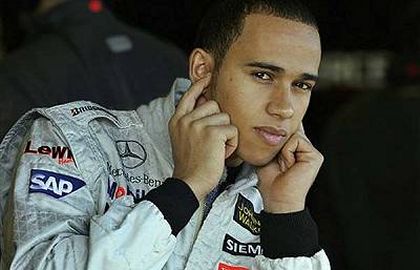
Hear no evil?
So is it better to be a team player? Should an ambitious and talented young driver allow other considerations to take precedence over his own success at times? History would seem to indicate that putting loyalty before personal advantage is a bad move if you want to be champion.
Sterling Moss famously decided at an early stage in his career that he would never drive for Ferrari; after Mercedes withdrew from motor racing, he drove only for British teams. With Italian teams dominating the championship until the late fifties, this was a decision that seemed doomed to prevent him ever being champion and so it proved.
In 1976, double world champion, Emerson Fittipaldi, made the surprising move to his brother's Fittipaldi team and stayed there through five years of driving a car that had no hope of taking him to a third championship. It was admirable family loyalty but disastrous for Emerson's reputation and success.
More recently, in 1999, Jacques Villeneuve agreed to drive for his friend, Craig Pollock, in the BAR team. He suffered the same fate as did Fittipaldi, leaving the glories of previous years behind him as the car failed to provide him with a chance of winning races. It was yet more proof, if any were needed, that nice guys finish second.
So can we assume that to become champion, one has to be singlemindedly selfish? It helps, obviously, and the fact that it can cause problems for the team does not seem to matter. Michael Schumacher's desertion of Jordan for the better prospects at Benetton did nothing to lessen his value on the drivers' market; his later departure to Ferrari left the team that had built itself around him in ruins, yet he went on to greater success than ever before.
Perhaps we should be excusing Hamilton's refusal to obey orders in Hungary with the thought that he needs to be self-centered if he is ever to be champion. The damage done to his squeaky-clean image is regrettable but an inevitable by-product of the ambition that brought him to F1 in the first place. In a way, he has now entered the F1 club and we can settle down to watch his progress without the smokescreen of hype that has surrounded him until now.
But it does mean that we can forget any illusions of the champion being a great person as well as a great driver. It is a very durable illusion, however, as shown by the weight given by the media to the political utterings of champions of any sport and the stars of the entertainment world. It is no surprise to find that so many of our heroes have hopelessly idealistic and unrealistic opinions on matters outside of their specialty - they have been concentrated on one task for so long that they have had no time to think other things through. Yet still we listen to them in awe.
And the same applies to the World Drivers Champion. We should not expect any great thoughts or words of wisdom to issue from a man merely because he knows how to handle a racing car. In fact, the real surprise is when we get a champion who does have something worthwhile to say.
I've been trying to think of an example. Fangio perhaps? Clark? But no, Clark never said anything. Jackie Stewart, Ayrton Senna maybe? It's difficult, isn't it? Whoever we think of, there are bound to be those who will disagree and cite instances that prove us wrong. Can you think of a champion who has been universally respected as a man as well?
Hear no evil?
So is it better to be a team player? Should an ambitious and talented young driver allow other considerations to take precedence over his own success at times? History would seem to indicate that putting loyalty before personal advantage is a bad move if you want to be champion.
Sterling Moss famously decided at an early stage in his career that he would never drive for Ferrari; after Mercedes withdrew from motor racing, he drove only for British teams. With Italian teams dominating the championship until the late fifties, this was a decision that seemed doomed to prevent him ever being champion and so it proved.
In 1976, double world champion, Emerson Fittipaldi, made the surprising move to his brother's Fittipaldi team and stayed there through five years of driving a car that had no hope of taking him to a third championship. It was admirable family loyalty but disastrous for Emerson's reputation and success.
More recently, in 1999, Jacques Villeneuve agreed to drive for his friend, Craig Pollock, in the BAR team. He suffered the same fate as did Fittipaldi, leaving the glories of previous years behind him as the car failed to provide him with a chance of winning races. It was yet more proof, if any were needed, that nice guys finish second.
So can we assume that to become champion, one has to be singlemindedly selfish? It helps, obviously, and the fact that it can cause problems for the team does not seem to matter. Michael Schumacher's desertion of Jordan for the better prospects at Benetton did nothing to lessen his value on the drivers' market; his later departure to Ferrari left the team that had built itself around him in ruins, yet he went on to greater success than ever before.
Perhaps we should be excusing Hamilton's refusal to obey orders in Hungary with the thought that he needs to be self-centered if he is ever to be champion. The damage done to his squeaky-clean image is regrettable but an inevitable by-product of the ambition that brought him to F1 in the first place. In a way, he has now entered the F1 club and we can settle down to watch his progress without the smokescreen of hype that has surrounded him until now.
But it does mean that we can forget any illusions of the champion being a great person as well as a great driver. It is a very durable illusion, however, as shown by the weight given by the media to the political utterings of champions of any sport and the stars of the entertainment world. It is no surprise to find that so many of our heroes have hopelessly idealistic and unrealistic opinions on matters outside of their specialty - they have been concentrated on one task for so long that they have had no time to think other things through. Yet still we listen to them in awe.
And the same applies to the World Drivers Champion. We should not expect any great thoughts or words of wisdom to issue from a man merely because he knows how to handle a racing car. In fact, the real surprise is when we get a champion who does have something worthwhile to say.
I've been trying to think of an example. Fangio perhaps? Clark? But no, Clark never said anything. Jackie Stewart, Ayrton Senna maybe? It's difficult, isn't it? Whoever we think of, there are bound to be those who will disagree and cite instances that prove us wrong. Can you think of a champion who has been universally respected as a man as well?