
I see that McLaren's J-damper has become a talking point again, with Grand Prix dot com running an article about its invention at Cambridge University. It now appears that McLaren had a deal with the university for its use in F1 and have been using it since 2005.
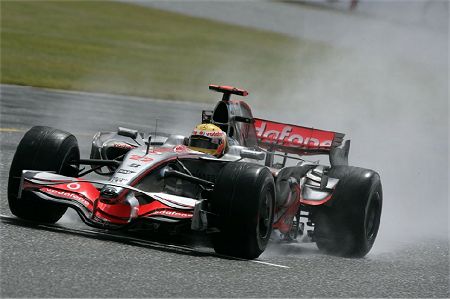
As I have pointed out before, the J-damper has hardly been a secret weapon ever since the revelations of the WMSC Renault hearing last year. In fact, it now appears that Cambridge published its invention in 2002 and that was how McLaren became aware of it. So the damper or "inerter" has been out there in the open for anyone to pick up until McLaren came along.
It is stretching a point to suggest that McLaren have been cheating because of their inerter. Clearly, the FIA knew about it because they passed over Renault's query on the device, saying that Renault "had not understood how it works". But it does make the FIA ban on Renault's mass damper in 2006 even more suspect; surely if the mass damper was judged to be an aerodynamic device, so was the J-damper.
Apparently, several teams have been using J-dampers from the beginning of this year and Renault was late in fitting them. So it is accepted as legal and hardly a hot subject for debate at this stage. I presume that Grand Prix ran the article at this time because of the lack of other news in the three-week break. It has made its little stir amongst those with short memories but will be lost again in the excitement of the forthcoming Valencia GP.
There is just one statement made in the article that I would argue with, however. This is the assertion that "the rules of Formula 1 mean that there is little room left for innovation but Cambridge University's engineering department has just revealed that this is not the case at all." That is overstating the case considerably; the J-damper was a minor invention of six years ago and has made only a marginal impact on F1. Since then, the rules have become even more restrictive and the opportunities for clever engineering tweaks correspondingly rare.
Recent rumors of engine power outputs being increased by fuel and lubricant research have proved that the restrictive rules of F1 continue to fail in the quest to reduce costs. If a team has the money, it will find a way to spend it. The FIA should face up to this and free up the rules again while finding more effective ways of limiting expenditure.