
In looking at the new F1 cars for the 2008 season, two areas stand out as receiving a great deal of attention from the designers: the front wing components and the radiator intakes. We are told that the cars get ever narrower and sleeker at the rear but this is hardly noticeable, whereas the front wing becomes ever more obviously complex and convoluted.
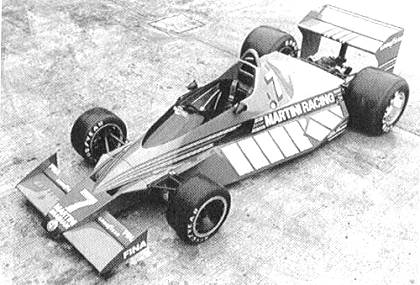
Brabham BT46
It is interesting too that the radiator intakes are assuming apparently identical shapes on all the cars. Each season brings smaller openings constrained into roughly triangular shapes while the bodywork around the sidepods becomes ever more deeply undercut. Clearly, the intakes are a major influence on the aerodynamics of the car and cause a great deal of work to optimize airflow in and around themselves.
We may think that this is a new discovery but, in fact, at least one designer was considering the problem way back in the mid-seventies. Brabham's chief designer, Gordon Murray, had a passion for making one element of the car perform two tasks and he decided that the radiator itself was obsolete and that its job could be done by something else. This made good sense for the radiator causes a great deal of drag, the flow of air being disrupted and slowed as it passes through.
Designers seem to have accepted the inevitability of the radiator now but it really is a creature from the prehistory of motoring, a simple arrangement of pipes being cooled by the breeze. Murray's solution was brilliant in its elegance and simplicity. Why not, he thought, use the body of the car as a heat exchanger, allowing the flow of air over the skin to draw heat from the engine coolant passing underneath?
The result of his thinking was the Brabham BT46 of 1978, a car so far ahead of its time that many of its innovations were to fail, only to re-appear in the future. Much of the BT46 was built of composite material rather than the aluminum sheet common at the time and it was the first to employ engine metrics. No radiators could be seen but, at the rear, the bodywork was covered in white rectangles - the heat exchangers of Murray's bright idea.
Sadly, in testing the car overheated obstinately, proving that the exchangers were just not up to the task of replacing the humble radiator. In the end, Murray had to insert conventional radiators in the front wing of the car and that is how it raced. The dramatic and sleek shape of the car was largely retained, however, and it remains one of the most beautiful F1 cars ever.
Although the idea of dispensing with radiators seems to have become part of history, I wonder whether its time has yet to come. Heat exchangers were insufficient for the purpose in the 1970s but it may be that technology has now produced materials that are more efficient than any available back then. We understand fluid dynamics so much better now as well. Is it impossible that some bright engineer might realize that the heat exchanger's moment in F1 has arrived at last?
At one stroke, all those problems around the radiator ducts would disappear and gone would be the drag of radiators impeding the airstream. Suddenly the sides of the bodywork would become free for the aerodynamicist to shape as he pleased. Sidepods might disappear altogether, just as they did in Murray's design.
Perhaps the greatest claim to fame of the BT46 was that it became the basis for the "fan car", another idea that used one thing to perform two purposes. The fan might have been necessary to cool the radiators moved to the rear of the car but it did a pretty good job of sucking the car on to the road as well. And that was not a new idea; Jim Hall had done it with the Chaparral 2J in 1970. So Gordon Murray was merely re-introducing an idea that had been outlawed by the regulators of sports car racing once they saw how effective it was - for one GP, the Swedish, the fan's moment had come. Inevitably, the governing body had a hasty meeting and decided that the fan car contravened the rules.
In contrast, there is nothing illegal about heat exchangers - they just didn't work as planned originally. But maybe they could be a lot more effective now; maybe it is an idea still awaiting its moment and, incidentally, its chance to show that the FIA have not yet managed to kill off innovation in F1 entirely.
Brabham BT46
It is interesting too that the radiator intakes are assuming apparently identical shapes on all the cars. Each season brings smaller openings constrained into roughly triangular shapes while the bodywork around the sidepods becomes ever more deeply undercut. Clearly, the intakes are a major influence on the aerodynamics of the car and cause a great deal of work to optimize airflow in and around themselves.
We may think that this is a new discovery but, in fact, at least one designer was considering the problem way back in the mid-seventies. Brabham's chief designer, Gordon Murray, had a passion for making one element of the car perform two tasks and he decided that the radiator itself was obsolete and that its job could be done by something else. This made good sense for the radiator causes a great deal of drag, the flow of air being disrupted and slowed as it passes through.
Designers seem to have accepted the inevitability of the radiator now but it really is a creature from the prehistory of motoring, a simple arrangement of pipes being cooled by the breeze. Murray's solution was brilliant in its elegance and simplicity. Why not, he thought, use the body of the car as a heat exchanger, allowing the flow of air over the skin to draw heat from the engine coolant passing underneath?
The result of his thinking was the Brabham BT46 of 1978, a car so far ahead of its time that many of its innovations were to fail, only to re-appear in the future. Much of the BT46 was built of composite material rather than the aluminum sheet common at the time and it was the first to employ engine metrics. No radiators could be seen but, at the rear, the bodywork was covered in white rectangles - the heat exchangers of Murray's bright idea.
Sadly, in testing the car overheated obstinately, proving that the exchangers were just not up to the task of replacing the humble radiator. In the end, Murray had to insert conventional radiators in the front wing of the car and that is how it raced. The dramatic and sleek shape of the car was largely retained, however, and it remains one of the most beautiful F1 cars ever.
Although the idea of dispensing with radiators seems to have become part of history, I wonder whether its time has yet to come. Heat exchangers were insufficient for the purpose in the 1970s but it may be that technology has now produced materials that are more efficient than any available back then. We understand fluid dynamics so much better now as well. Is it impossible that some bright engineer might realize that the heat exchanger's moment in F1 has arrived at last?
At one stroke, all those problems around the radiator ducts would disappear and gone would be the drag of radiators impeding the airstream. Suddenly the sides of the bodywork would become free for the aerodynamicist to shape as he pleased. Sidepods might disappear altogether, just as they did in Murray's design.
Perhaps the greatest claim to fame of the BT46 was that it became the basis for the "fan car", another idea that used one thing to perform two purposes. The fan might have been necessary to cool the radiators moved to the rear of the car but it did a pretty good job of sucking the car on to the road as well. And that was not a new idea; Jim Hall had done it with the Chaparral 2J in 1970. So Gordon Murray was merely re-introducing an idea that had been outlawed by the regulators of sports car racing once they saw how effective it was - for one GP, the Swedish, the fan's moment had come. Inevitably, the governing body had a hasty meeting and decided that the fan car contravened the rules.
In contrast, there is nothing illegal about heat exchangers - they just didn't work as planned originally. But maybe they could be a lot more effective now; maybe it is an idea still awaiting its moment and, incidentally, its chance to show that the FIA have not yet managed to kill off innovation in F1 entirely.