
In his post entitled Any sympathy for McLaren?, Keith Collantine made a statement that helped to clarify my own thoughts on something. He wrote:
"...this year, I think more highly of Ferrari than I have since the days of Gerhard Berger and Jean Alesi in the mid-’90s - even if they hardly ever won anything back then".
My immediate response was, "So do I! But why?"
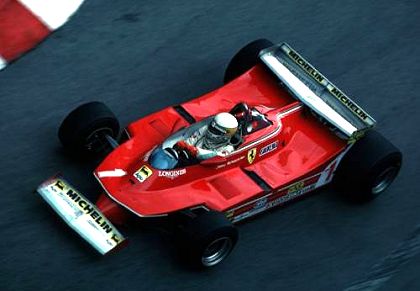
Jody Scheckter in the Ferrari T5, 1980
The answer is pretty obvious, of course - it's that Mickey the Shoe character again. He deserves credit for transforming Ferrari into a highly efficient and successful machine (and it was he who insisted on Ross Brawn being taken on, remember) but he also introduced aspects that polarized attitudes and must have been difficult even for Ferrari fans to gloss over. Michael's recourse to dubious tactics in pursuit of victory has been discussed so often before that there is no need to resurrect the issue again, but the FIA's apparent favouritism towards the team must also play a part in my dislike of Ferrari.
That the FIA should be that way is quite understandable. Ferrari is very important to F1; for many years it has been the sole bulwark against the sport becoming a totally British affair and its history makes it an icon in the minds of anyone who loves motor sport. The fact that it won no championships for years after Jody Scheckter's in 1979 was bound to create a concern that the team might be forced to give up unless it tasted success soon.
It would be no surprise, therefore, if the FIA were to have given a little quiet assistance during the lean years; understandable, yes, but still an affront to anyone who considers that the governing body of a sport should be above all preference for one participant or another. It did not help either that the leaning towards Ferrari seemed to continue even after the team began a long run of huge success.
I believe that dominance in the sport is a recipe for a large section of the fanbase turning against a team. When races become drearily predictable and the only debate centers on who will come second or third, F1 fans get restless and start to blame the team that does all the winning. I suffered from that effect when McLaren were on top (15 wins in a 16-race season? That's not competition!) and again with Ferrari in the Schumacher years. Had Alonso continued with a Renault team that produced a winning car year after year, the same would have happened to them; there were already signs of a slump in Alonso's popularity after his second championship.
But now things seem to be changing. With Montezemolo's Italianization of Ferrari, there are signs already of a decrease in their competitiveness, of a return to those years when they were so gloriously Italian indeed. They may not have been winners in those years but they were always in with a shout and the constant internal bickering and confusion made them so entertaining. Back then they were almost cuddly in their appeal and it was easy to hope for a revival in their fortunes on the track.
So Ferrari may not win the championship this year but that is not necessarily a bad thing for them. They will become that much more likable and, ignoring whatever happens in the Stepneygate affair, will gather more fans to their collective bosom. They may not like that, of course, and would probably prefer to carry on winning regardless of how people feel about it. But it would at least make it easier for us to forgive them their failings.
"...this year, I think more highly of Ferrari than I have since the days of Gerhard Berger and Jean Alesi in the mid-’90s - even if they hardly ever won anything back then".
My immediate response was, "So do I! But why?"
Jody Scheckter in the Ferrari T5, 1980
The answer is pretty obvious, of course - it's that Mickey the Shoe character again. He deserves credit for transforming Ferrari into a highly efficient and successful machine (and it was he who insisted on Ross Brawn being taken on, remember) but he also introduced aspects that polarized attitudes and must have been difficult even for Ferrari fans to gloss over. Michael's recourse to dubious tactics in pursuit of victory has been discussed so often before that there is no need to resurrect the issue again, but the FIA's apparent favouritism towards the team must also play a part in my dislike of Ferrari.
That the FIA should be that way is quite understandable. Ferrari is very important to F1; for many years it has been the sole bulwark against the sport becoming a totally British affair and its history makes it an icon in the minds of anyone who loves motor sport. The fact that it won no championships for years after Jody Scheckter's in 1979 was bound to create a concern that the team might be forced to give up unless it tasted success soon.
It would be no surprise, therefore, if the FIA were to have given a little quiet assistance during the lean years; understandable, yes, but still an affront to anyone who considers that the governing body of a sport should be above all preference for one participant or another. It did not help either that the leaning towards Ferrari seemed to continue even after the team began a long run of huge success.
I believe that dominance in the sport is a recipe for a large section of the fanbase turning against a team. When races become drearily predictable and the only debate centers on who will come second or third, F1 fans get restless and start to blame the team that does all the winning. I suffered from that effect when McLaren were on top (15 wins in a 16-race season? That's not competition!) and again with Ferrari in the Schumacher years. Had Alonso continued with a Renault team that produced a winning car year after year, the same would have happened to them; there were already signs of a slump in Alonso's popularity after his second championship.
But now things seem to be changing. With Montezemolo's Italianization of Ferrari, there are signs already of a decrease in their competitiveness, of a return to those years when they were so gloriously Italian indeed. They may not have been winners in those years but they were always in with a shout and the constant internal bickering and confusion made them so entertaining. Back then they were almost cuddly in their appeal and it was easy to hope for a revival in their fortunes on the track.
So Ferrari may not win the championship this year but that is not necessarily a bad thing for them. They will become that much more likable and, ignoring whatever happens in the Stepneygate affair, will gather more fans to their collective bosom. They may not like that, of course, and would probably prefer to carry on winning regardless of how people feel about it. But it would at least make it easier for us to forgive them their failings.