
The FIA's publication today of their version of events leading up to the present crisis in F1 makes it clear that any agreement between the warring parties has become almost impossible. By announcing its determination to proceed with the regulations as originally published, the governing body has put an end to further negotiation with the teams. And it hardly matters whether we believe the FIA's statement or not; that is the way Mosley sees it and that is the course of action he is now set upon.
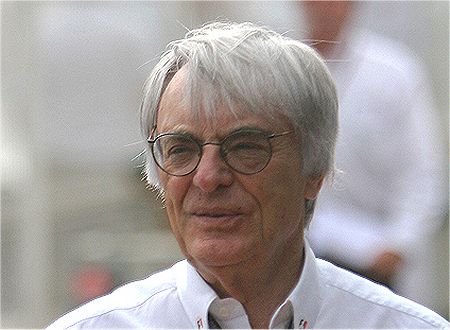
Bernie Ecclestone
We can take it, therefore, that next season will see F1 fielding two existing teams, Williams and Force India, and several new teams, those already accepted and any of the other applicants who prove capable of getting a car on to the grid in Melbourne. It remains to be seen whether FOTA will attempt to set up a competing series or allow its members to enter existing series or withdraw from motor sport completely. Even if a new series is established, we can be sure that neither F1 nor its rival will be as fascinating as the sport we know today; we can be certain that viewing figures will plummet as a result.
At that point, it is inevitable that our thoughts turn to the one whose reason for being is control of the income from F1, Bernie Ecclestone. He is the one who has most to lose from a split in the sport and yet, beyond a brief call for calm, we have heard nothing from him. I can only presume that he is beavering away behind the scenes, trying to hold his cash cow together. Indeed, we must hope so because, as things stand at the moment, he is the last hope for the continuation of F1 as we know it.
There is some irony in that. Ecclestone is often credited with having created F1 as the huge spectator sport that it has become yet I would argue that, in doing so, he has brought about the situation we are watching now. It is no accident that the sport has seen an increase in litigation, argument and threatened withdrawals over the last few years; as it has expanded into the arena of entertainment, so has its income grown exponentially and become something worth fighting for.
Without this expansion, the manufacturers would never have become interested to the point of setting up their own teams, the investment of funds would have remained at a reasonable level and no one would be claiming the sport as a business. The sport would have been worth televising in those countries where its fanbase was strongest (Europe, North and South America, Japan) - the BBC began showing every GP back in 1978, long before Ecclestone got his hands on the purse strings - but there would have been no need to depart from established venues to race in countries with non-existent fanbases but plenty of government money.
F1 could have continued as the esoteric interest of the few, the creator of household names but never the entertainment of millions that it has become. As an ancient and wrinkled follower of F1, I have the right to say that would have been no bad thing. Indeed I protest, not only at the destruction of the sport that looms over us, but also at its conversion from private obsession to multi-million dollar entertainment for the masses.
Much has been said recently about the elitist nature of F1, that it is essentially a sport for the fabulously rich. This is intended as a criticism but, in fact, it defines the sport quite aptly; it has always demanded the input of ridiculous sums of money. That is why it is a display of technical excellence and driving skill that fascinates us and makes us dream. Yes, F1 is elitist and that is the essence of its attraction. There would be no point in fantasizing about being an F1 driver oneself were it not clearly the stage upon which the best perform.
Young blood demands that it be tested and it will find its outlet, whether that be in physical pursuits or in mental prowess. And, with the spread of motoring in the mid-twentieth century, it was inevitable that driving skill should become a matter of ambition and motivation amongst the young. Once discovered, motor racing becomes an end in itself and the need to be the best pushes the aspirant towards the heights, that form of racing we know as F1. But it has always been the domain of the few; when confronted with the sacrifices, both physical and financial, that have to be made, most of us recognize our limits and find our satisfaction in dreams rather than reality.
That is how a fanbase is born. And, since there are many sports, the dream may focus upon all sorts of achievement, the national footballer scoring the winning goal, the sprinter bringing home the Olympic medal, the chess master beating the Russians at last. F1 captures its devotees but they remain a small minority as long as the sport is an obsession rather than an entertainment.
That is what Ecclestone has done for us. He has converted the obsession of the few into a show watched by millions. Those few nutcases who have held on to the dream have sat through the transformation of their sport into a branch of the entertainment industry uncomplaining, vaguely aware that things were drifting out of control but comforted to some extent by the addition of large numbers to the cause. How could it be a bad thing if the greatest sport on earth were to expand the number of its followers?
We see now why we should have called a halt to the hijacking of F1 long ago. Now the excuse for rule changes is the improvement of the show, now the rich fight over division of the spoils, now interests of huge organizations tear the sport apart while those who really care about the remnants of competition left to it are ignored as merely the paying customer. This is what F1 has come to.
The amazing thing is that we still care. The sport is a robust beast and its essential elements of competition survive under the glitter and artificiality of show business. The dream remains, although its future hangs in doubt as the threatened split looms upon the horizon. This may be the final death knell of F1 and it is no surprise that the endurance of the fans turns into disgust and cries of "I will not watch it next season" abound.
For shame, Bernie, that you have brought us to this pass. Now get in there and fix it!