
Pitpass has an interesting article on F1 finance and sponsorship today. After pointing out how costs have increased for the teams, it then looks at the value sponsors and advertisers are getting for their money. And the answer seems to be pretty gloomy, with vast amounts being spent for not a great deal of return.
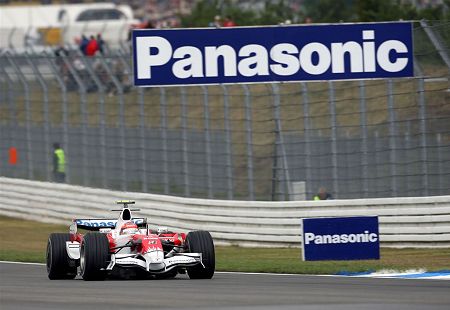
I have often wondered how long it would be before advertisers realized that F1 does not give wonderful bang for their bucks and am quite surprised that it has taken so long for serious studies to be made in this area. One must presume that advertisers know what they're doing and get something for their sponsorship but, considering that I cannot remember ever being influenced in my purchases by a logo painted on a F1 car, it may be that intangible factors such as prestige and glamor enter the equation.
In the past, tobacco advertising was forced into F1 as laws became ever more restrictive and this was the core of the teams' funding during the 70s, 80s and 90s. The eventual demise of tobacco company sponsorship has meant that funding has to be found elsewhere and so we have the banks, insurance companies and energy drink manufacturers becoming involved.
These new sponsors are not there because they have no other outlet, however; it is natural that they should keep an eye on the return on their investment. This is probably what has sparked off such studies as Formula Money's, as referred to by Pitpass. And the news is not good, with the economic climate reportedly gloomy and F1 costs spiralling ever upwards.
Pitpass wonders whether this means a crash looming for the sport and it is difficult to see any other outcome as long as things continue in this direction. That sounds as though it would be disaster but I am inclined to think that it might actually be a good thing for the sport. Bernie and others like him would suffer but I am not going to lose sleep over that. And drivers and teams would have to accept a greatly reduced income.
Would this necessarily be a bad thing? Much fuss is made of F1 being the pinnacle of technical advance and innovation but the reality is that regulation has as good as killed the development of new engineering ideas. The likelihood is that the F1 car will increasingly be the test bed for systems that have nothing to do with performance and any claim to be the top form of motor sport will become dubious at best.
A financial crash would, in fact, force the FIA to reconsider its aims and think again about how to run an international sport that is not overflowing with cash. Such things as stock blocks might have to be allowed or even enforced, costly and difficult materials would have to give way to the tried, tested and dirt cheap methods of making a chassis. Wind tunnels would definitely have to go and we might end up with a form of motor racing that small teams could compete in once again.
The fact is that a financial crash would not kill off F1. It would be hugely disrupted at first but, as compromises and different solutions were worked out, it could be developed into a less refined but more watchable formula. The fans come to watch the skills of the drivers much more than the esoteric details of the cars and so it is probable that the fanbase would survive. If the races improve in quality as the designers are forced to abandon all their costly toys, they might even gain more viewers. Change is painful but sometimes for the best.
And, who knows, F1 might become a sport again, instead of a complex means of making Bernie Ecclestone ever richer...