
Today, Autosport has an interesting article entitled Analysis: the state of Formula One. It contains the thoughts of some of the teams' heavyweights on the prospects for the future of F1. What I find surprising is the lack of any consensus or unified thinking from the participants.
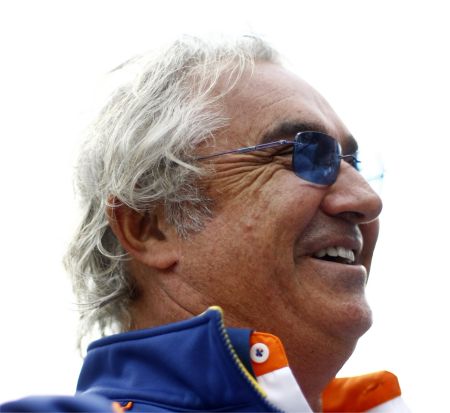
Flavio Briatore
We tend to think of the manufacturer teams as being of one mind on most things but that seems to be a misconception. While there is general agreement that costs need to be brought under control, thoughts on how that should be done range from passive acceptance of the coming budget cap to criticism of the constant rule changes as a major expense. If we add Gerhard Berger's recent slating of the budget cap as insufficient to encourage the entry of new teams, it becomes clear that each team tends to concentrate only upon its own problems without any real attempt to consider the good of the sport.
So the manufacturers see things from their own point of view, even putting their faith in such unlikely dreams as the Volkswagen/Audi Group becoming involved, while the independents still look for ways to ensure their own survival and, perhaps, add to their numbers. There is no sympathy for the recent demise of Super Aguri, the defunct team being criticized as artificial and insufficiently funded, at the same time as there being no admission that this is the norm amongst newcomers (including the roots of some of the big teams participating in the discussion). Let Renault think back to its days as Toleman, for instance, or Red Bull admit to its stuttering start as Stewart and then Jaguar Racing. Without such optimistic newcomers, the sport will slowly die for lack of fresh blood but there seems no recognition of the fact by the present contenders.
Perhaps it is natural that those involved in the stress of competing in F1 should find it hard to take their minds from the concerns of the moment and see the future hurrying towards them. We have seen how often this affects the FIA, when adjustments to the rules are made by the self-styled experts years after they have been called for by the fans. And this does make me wonder at my own thoughts for a president to replace Max Mosley.
The most widely suggested candidate has been Sir Jackie Stewart, a man with all the apparent qualifications necessary. Yet I have seen it stated that any leader of the FIA should have credentials in big business rather than motor sport. The sport is a business now, we are told, and needs proper exceutive control as a result.
That may be true but it is a strange business indeed, one so splintered into conflicting interests that I cannot see any heavyweight CEO finding it to his liking. While the FIA itself is supposed to set the rules and oversee them, financial rights have been sold off for the next 100 years; the teams all unite in barely-suppressed rebellion against the strictures imposed on them but fight amongst themselves at the slightest provocation. They talk of business models for any team coming in, yet where is the business model for F1 itself?
If it were money we were talking about, the answer would be easy: Bernie Ecclestone is the model. He is the one who has separated financial matters from the running of the sport and it is he who controls that side of things, in spite of having sold the rights to CVC. While Max writes his letter to delegates, explaining his indispensability, the truly indispensible man is Bernie.
This is hardly a business that a CEO from the world of corporations would recognize as such. I can see any such successful candidate immediately demanding power over financial matters as well as regulatory functions. Max makes much of his negotiations to claw back some of what he has signed over to Bernie but any president worth his salt would be more interested in repudiation of the ill-advised sale.
The fact is that CVC cannot agree to any lessening of its power over financial affairs. It is so deeply in debt as a result of its purchase that it needs years of huge profits to get anywhere near repayment of its investment. So any incoming president is going to have to live with a severe restriction on his powers over the sport as a whole. Bang goes any dream of having a captain of industry guiding this particular ship.
So we must return to the idea of a statesman from motor sport taking on the job. Sir Jackie would probably refuse the appointment and it is difficult to see anyone of comparable stature standing in the wings. Is it possible that we should be thinking in terms of presidential teams instead of one man? The task of setting F1 on the right path again is enormous and requires more skills than any single person is likely to have.
The imminent departure of Max (I cannot bear the thought of the alternative) must be a chance for the FIA to consider such radical approaches to the problem. It has a list of prospective candidates suggested by itself, the teams and the fans - let it consider accepting several of those as candidates and a restructure of the presidential role as a figurehead within a team of able leaders.
This is whistling in the wind, I know. But if it is never said, it will never happen and, judging by the lack of vision evident in Autosport's little discussion, F1 desperately needs an injection of new ideas.